
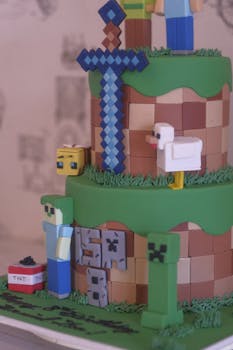
Letting your imagination run wild can transform a simple afternoon into a memorable adventure. Within many digital playgrounds, you’ll find endless opportunities for playful self-expression. These are the spaces where sandbox games shine brightest.
When discussing modern gaming’s finest, it’s impossible to overlook how sandbox games allow creative minds to flourish. Players aren’t just following instructions—they’re inventing entire worlds from scratch.
If you’re eager for open-ended experiences where your decisions shape the environment, keep reading. This article explores concrete ways sandbox games inspire creativity and offers tools for building your own unique visions.
Player-driven discovery in sandbox games rewards experimentation every step
Experimenting unlocks new skills. Sandboxing means discovering limits through trial, error, and adjustment, which mirrors the way we learn through hands-on play.
Unlike rigid games, you can set personal goals within sandbox games and learn directly from each attempt. There are no fixed blueprints—instead, you get robust toolkits and the encouragement to experiment freely.
Mixing and matching mechanics to create personal playstyles
Players often mix tools, items, and game mechanics, combining them into novel solutions. In practice, someone might use building blocks in a puzzle game to create a shortcut no designer predicted.
For example, tweaking rules in in-game editors lets users invent their challenges or unique game modes. This makes sandbox games feel like open workshops for creativity and collaboration.
When someone says, “I built a rollercoaster using only basic rails and gravity tricks,” they’ve pushed boundaries and found real satisfaction in hands-on play.
Making mistakes that turn into learning opportunities
Mistakes in sandbox games rarely end with a game over; they’re usually the first step toward inventive solutions. Breaking a structure teaches about physics or resilience.
Watching someone’s virtual city flood isn’t just entertaining—it demonstrates cause and effect, giving immediate feedback and inspiring new strategies. Treat failure as part of your creative workflow.
Designers know that risk-free iteration is essential. Players should remember: every attempt builds better intuition for experimenting in future sessions.
| Game Title | Main Creative Focus | Player Freedom | Try This Next |
|---|---|---|---|
| Minecraft | Block-building and redstone logic | Unlimited | Design an automated farm using new block types |
| Terraria | 2D world-building and exploring biomes | High | Create a themed biome or build an arena for events |
| Roblox | Game development and design | Expansive | Import free assets into your own mini-game structure |
| The Sims 4 | Life simulation and architectural design | Wide | Remodel a tiny home or start a neighborhood challenge |
| Kerbal Space Program | Spacecraft engineering and experimentation | Very high | Build a rocket with staged boosters and document each failure |
Flexible objectives fuel unique player-led projects in sandbox games
You gain agency by defining your ambitions within these virtual settings. There’s no single finish line; instead, you pick what “winning” looks like.
Checklists can guide newcomers—build a shelter, launch a first rocket, host a social event. Flexibility means you learn at your own pace while exploring possibilities.
Setting ‘micro-goals’ that unlock bigger creative visions
Start with a single project, such as designing a small garden or constructing a simple bridge. These finished micro-goals inspire you to attempt more ambitious plans later.
- Sketch a base layout before building—visualize space management and prevent wasted resources with planning.
- Test small mechanisms alone—validate function and discover interactions before scaling up in sandbox games.
- Document new blueprints—keep a notebook or screenshots for easy replication or sharing ideas online.
- Build incrementally—add layers or detail over several sessions rather than rushing. This prevents burnout and improves results.
- Share feedback—ask for opinions from friends or communities to refine your designs and discover overlooked features.
Reach out to others who share your interests; their encouragement makes large ambitions feel manageable one goal at a time.
Improvising with unexpected resources adds depth to each session
When a project doesn’t go as planned, see it as a prompt for creative improvisation. Use leftover materials in innovative ways to complete builds.
- Repurpose blocks—combine stone, wood, or special materials for creative contrasts in appearance and function.
- Layer systems—integrate electrical, crafting, and movement systems for rich interactive spaces.
- Harness environmental quirks—work around weather, terrain, or hazards for realistic and surprising builds.
- Document discoveries—track accidental finds for future use or as resources for other players.
- Test variations—run through two or three designs, comparing them to see which works best for the scenario.
Over time, you’ll notice these skills transfer into problem-solving beyond the game as well.
Peer collaboration builds momentum in shared creative spaces
Cooperation transforms solo projects into community masterpieces. Collaborating in sandbox games brings together diverse talents—builders, designers, storytellers—amplifying creative energy.
Many groups organize around themed builds, using voice chat or messaging for real-time planning. This encourages teamwork and friendly competition.
Assigning team roles boosts efficiency
Effective teams assign distinct duties: one sketches layouts, another gathers materials, another decorates. Overlapping roles lets teammates support each other and avoid creative bottlenecks.
Some groups rotate tasks each session, keeping everyone involved. For example, switching between construction and testing helps maintain motivation during longer projects.
When someone says, “You handle the wiring, I’ll outline the structure,” collaboration thrives and individual contributions get recognition along the way.
Crowdsourcing ideas sparks imaginative outcomes
Larger servers or online communities frequently organize design contests or voting events. Here, hundreds of suggestions merge into a grand final plan.
Sharing screenshots, blueprints, or short video clips makes it easy for everyone to contribute feedback or new ideas in iterative cycles.
Hosting group brainstorm sessions—“Let’s try a futuristic city layout this time!”—provides visible creative energy and novel solutions.
Iterative building and feedback sharpen skills over time
Regular iteration helps players refine both technical and creative competencies within sandbox games. Making, evaluating, and revising projects teaches adaptability.
Repetition transforms raw ideas into sophisticated designs. Treat each version as an experiment—document what works, discard what doesn’t, and build on strengths.
Adopting feedback as an active process
Volunteering or joining critique circles lets you offer and receive direct feedback. When someone suggests, “Try light bricks for contrast here,” accept input as chances to improve.
Before the next session, reflect on reviews and try drafting two revisions. This habit sharpens observation skills and boosts creative confidence.
Keep a ‘revision wall’—screenshots or notes showing project evolution over weeks. You’ll spot patterns and measure progress visually.
Using structured challenges to prompt innovation
Many sandbox games feature time-limited events or theme prompts, such as “small house contest” or “ocean base weekend.” Take these as invitations to break routines.
Accept an unexpected challenge—design with only two material types, or without using vehicles. Constraints inspire inventive solutions and lighten pressure of open-ended freedom.
Competing against yourself or peers builds resilience. When you finish a timed build-off, reward yourself with a tour or shared screenshots before moving on.
Custom content tools empower lasting creative expression
Many sandbox games provide level editors, modding kits, and scripting tools that unlock new frontiers. Players become co-creators, adding personal content to expand the game’s repertoire.
Creating new objects, storylines, or entire worlds cements lasting ownership. Sharing these creations with others helps knowledge spread and community bonds to grow stronger.
Learning new toolsets one step at a time
Jumping into complex editors can seem daunting, but starting with a tutorial, like “how to use tile-sets for background art,” makes progress obvious even in one session.
Translate analogies from other hobbies: modifying a game feels much like painting over a coloring book—start with simple tweaks before advancing to custom scripts or rulesets.
Every new element you add—an animal, texture, or interactive rule—mixes with pre-existing play to ensure every session stays fresh and engaging.
Uploading and sharing personal content boosts recognition
Uploading houses, vehicles, or custom adventure maps connects you with others instantly. Positive feedback can motivate you to make further improvements.
Hosting downloadable content—such as a “Halloween challenge map”—transforms the game into a living platform for collective imagination. Productive creators receive accolades or even see their work featured on popular servers.
Sharing isn’t just about likes—it’s about helping fellow players solve problems or learn new techniques in approachable ways.
Exploring unexpected genres and creative frontiers with sandbox games
Sandbox games aren’t limited to block-building or city simulators. Today, they span mystery, music, physics, and even educational spaces—every genre becomes a laboratory for fresh ideas.
Expanding into new themes lets players adapt their creative processes for original results. You might be building a fantasy garden one week and composing a rhythm adventure the next.
Testing logic and language skills in creative environments
Puzzle-based sandbox games ask users to write scripts or solve logic problems—like scripting door sequences or building mini-games with triggers. This style encourages deeper cognitive engagement with cause and effect.
Programming logic into a physics sandbox trains both pattern recognition and resourcefulness. If you say, “I’ll chain these switches so the bridge rises only at sunset,” you’re solving puzzles creatively.
Try explaining your solutions in chat for peer review. Others might spot flaws you missed or suggest smarter ways to combine code blocks or trigger chains.
Adapting roleplay and narrative in flexible worlds
Story-driven sandbox games allow users to craft branching tales. You could create a murder mystery map or build interactive characters that trigger events as players visit locations.
By acting out scenarios or script prompts (“You discover a hidden journal under the stairs. Now choose your next move”), you turn static environments into vibrant stories anyone can join.
Set up dialogue triggers using in-game editors. Players might say, “Let’s act out the festival quest tonight!”—a sign the community embraces the creative tools provided.
Reflecting on your creative journey and imagining the next steps
Routinely exploring sandbox games develops skills that reach far beyond virtual worlds. Each session leaves you more resourceful, confident, and ready to embrace new creative challenges.
Remember, every successful build, failed experiment, or collaborative project adds to your unique playbook. Diverse experiences make you better equipped for both future games and real-world problem-solving.
Play today, experiment with bold new ideas, and pass your discoveries forward to fellow creators. Sandbox games are dynamic environments where creativity continues to thrive—your next big idea might just shape the next virtual world.