
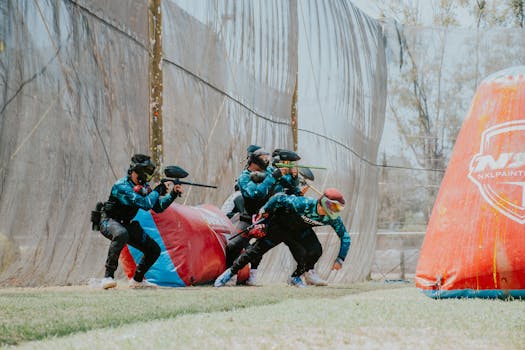
Nailing the right call in a blink can mean victory or defeat when every second counts. Fast-paced games make decision making an ever-present, high-stakes challenge that demands your attention.
When players master decision making, they move from reacting impulsively to acting with clear intent. This shift doesn’t just change outcomes—it builds lasting skill and confidence under pressure.
If you want to win more, feel less overwhelmed, and sharpen your instincts, stick around. The step-by-step approaches here will transform your decision making in any fast-paced gaming environment.
Trusting Quick Instincts for Real-time Results
Reacting fast and accurately isn’t just about speed. It involves building habits that let your decision making become instinctive, so actions follow in sync with game flow.
Consistent success grows out of reps: the right moves become almost second nature. When you deliberately practice common patterns, your decision making upgrades from guesswork to reliability.
Pattern Recognition Powers Rapid Choices
One split-second block in a fighting game changes a round. Your eyes dart to animation cues; you trust your decision making because you’ve rehearsed similar moments countless times.
Think of your process like a driver navigating busy traffic. Reacting to recurring signals lets you anticipate what’s ahead, rather than endlessly second-guessing. Pattern literacy strengthens every decision making moment.
Cultivate awareness of common scenarios—enemy behaviors, map layouts, timing intervals. This gives your decision making a foundation that won’t break down when things speed up.
Brain-Body Sync Drives Instant Action
Hand speed alone doesn’t guarantee strong decision making. When rapid input combines with mental clarity, your moves become purposeful, not panicked.
A seasoned player learns the feel of their hardware—key presses, mouse clicks, stick rotations—so there’s no fumbling during high-stakes moments. This muscle memory makes quality decision making automatic rather than forced.
Give yourself short drills that isolate basic reactions: dodge, counter, aim. Every time you practice, you reinforce instant, confident decision making during gameplay.
| Scenario | Instinctive Cue | Typical Response | Next Step |
|---|---|---|---|
| Ambushed by enemy | Sudden footsteps | Spin/aim defensively | Move to cover immediately |
| Low health warning | Screen flashes | Retreat or heal | Call for support if team-based |
| Power-up spawns | Map ping | Sprint towards bonus | Check surroundings first |
| Opponent charges forward | New animation | Block or counter | Prepare follow-up attack |
| Ally requests backup | Voice/chat ping | Head towards ally | Watch ambush routes |
Breaking Down Choices with Micro-Decisions
Focusing on small, manageable choices—micro-decisions—lets you stay responsive, not overwhelmed, in fast-paced games. Clear, specific rules steer your decision making amid chaos.
When momentum shifts quickly, a checklist of micro-decisions guides you. Stacking these wins up creates a chain of outcomes that feed confident, faster decision making.
Using a Priority Ladder to Sequence Moves
Building a simple ladder of priorities makes every moment less confusing. For example, a player might say, “If I’m threatened, defense comes first; if safe, attack.” The ladder streamlines decision making.
This lets players calibrate moves mid-action. Each rung asks a binary: defend, escape, attack, or reposition. Ladder logic strengthens decision making by limiting options in tense situations.
- Prioritize self-preservation so your decision making prevents unnecessary risks and keeps you in the game longer. Check your health or safety before taking any further action.
- Identify the biggest threat rapidly by scanning the immediate area—decision making works best when you focus on the opponent or hazard closest to you.
- Maintain situational awareness; constantly update your mental map to support decision making. Refresh your view after each engagement to anticipate new threats or opportunities.
- Communicate small intentions quickly with your team: “Cover left,” or “Rotating mid.” Even fast-paced games benefit from direct information, sharpening everyone’s decision making instantly.
- Review every action immediately after you take it. This reflection tightens your decision making loop and avoids repeating preventable mistakes.
All these micro-decisions train you to act purposefully under pressure. Every repetition adds to your overall decision making skill set.
Building Confidence With Intentional Outcomes
Linking each micro-decision to a clear goal builds confidence. For example: “If I escape a trap, I’ll regroup near cover.” Small wins stack up over longer matches.
Review your best and worst decisions after each session. Honest analysis resets your instincts so your future decision making keeps getting sharper and faster.
- Visualize the ideal outcome before making your choice—decision making sharpens when you picture the finish line, not just the next step.
- Practice slowing down momentarily to confirm your reflexes align with your chosen goal. Even half a second of focus polishes your decision making under duress.
- Pair every action with a reason. If you moved left, know why. Reason-backed decision making sticks.
- Replace “what if” with “next time.” Turn regret into actionable tweaks for your next decision making scenario.
- Use a short mantra like “Choose, Act, Adapt.” It helps your brain link intent to outcome for repeatable decision making improvement.
By focusing on the next realistic outcome, you make decision making less abstract and much more actionable for any future high-speed game scenario.
Fine-tuning Your Response Through Environmental Awareness
Staying alert to the surroundings in fast-paced matches puts your decision making a step ahead of just reacting to what’s directly in front of you.
Use environmental details—sounds, layouts, visual cues—to shape your decisions in real-time, rather than falling into tunnel vision that limits your responses.
Using Peripheral Cues to Stay Proactive
Expert level decision making includes tracking shifting elements: enemy positions, spawn timers, sound cues. Glancing at mini-maps without losing sight of the action helps optimize every call you make.
The best players tune out distractions while keeping their awareness broad, almost like scanning rearview mirrors in a race. This layered monitoring dramatically boosts decision making accuracy in clutch situations.
Make a habit of checking secondary cues between every major move. This micro-break maintains clarity, letting you sync vision with decision making in real time.
Anchoring Your Moves to Landmarks
Tie big plays to recognizable map features, objects, or timing intervals. This anchors your decision making so you avoid wandering or freezing under stress.
One reliable method is to declare, “I’ll regroup by the red barrel,” or “I’ll push after the next countdown.” Landmarks turn your decision making into a repeatable routine.
Teach your team the same approach for smooth, coordinated decision making. Syncing anchor points builds trust and reduces confusion in hectic matches.
Reading Opponent Patterns to Predict Behavior
Anticipating other players’ moves shifts decision making from reactive to proactive, cutting down mistakes and boosting consistency even when opponents are unpredictable.
This proactive mindset makes your responses feel pre-loaded, not just random guesses. Notice habits, hesitations, or repeated plays to create tactical advantages with each decision making opportunity.
Tracking Tells and Habits for Smarter Calls
Watch for physical cues—hesitant footsteps, repeated flanking patterns, predictable reloads. One player says, “They always rush after a flashbang; next round, I’ll pre-aim the bombsite.” That’s pattern-based decision making.
Writing a mental playbook for recurring opponent behaviors lets you plan counter-strategies, which accelerates your future decision making loops by removing guesswork.
At the end of each match, jot down two opponent moves that worked and two that didn’t. This post-game ritual builds pattern memory into your decision making framework.
Adapting Quickly to Sudden Strategy Shifts
Not every opponent is consistent, so expect sudden changes. Fast-paced games demand that you reset your strategy on the fly when familiar routines stop working.
When you sense a shift, such as a rival swapping weapons or routes, pause and signal your team: “Looks like they’re swapping; let’s play slow for a round.” This pivots your decision making.
Aim to act, review, then adapt right away. Don’t wait for confirmation—timely adaptation keeps your decision making agile as the action speeds up.
Managing Stress for Precise, Calm Choices
Maintaining cool focus allows you to keep decision making sharp even when pressure peaks. Staying calm isn’t a trait—it’s a repeated practice built on routine resets.
Players who regulate stress break the “panic loop” and make more rational, timely decisions, even during losing streaks or tight game finishes.
Building In-game Reset Rituals
Make a deliberate reset after every major play—stand up, stretch, or take three deep breaths. These small rituals clear brain fog, preparing your decision making for what comes next.
When something goes wrong, acknowledge it with one controlled phrase, “Reset, eyes forward.” Quick verbal acknowledgment closes out frustration so you control decision making tempo.
If nerves spike, anchor yourself with slow, conscious breaths. This interrupts your adrenaline surge and prepares your brain for more accurate decision making on the follow-up play.
Turning Nerves Into Action Steps
Convert worry into planning energy by translating “I’m anxious” into a checklist: check health, scan map, plan exit. Actionable steps calm overthinking, promoting clarity in your decision making process.
Share short status updates with your team. Stating, “I’m healing, cover me,” replaces worry with teamwork, distributing mental load and reinforcing joint decision making.
After big plays, replay mentally what you did right. Small success reflections keep your confidence up and your decision making crisp for the next round.
Integrating Feedback for Constant Growth
Applying feedback—both from yourself and your team—sharpens every aspect of your decision making. The learning cycle never stops in fast-paced games.
Players who welcome feedback see mistakes as crucial data, not personal failures. Every review becomes a chance for specific, meaningful improvements in your future decision making rounds.
Making the Most of Post-Game Reviews
Set aside five minutes after each session to replay key moments with friends or teammates. Ask, “What worked? What didn’t?” This outside view upgrades decision making quickly.
Together, sketch new approaches on paper or voice chat. “Next game, let’s switch flanks if we lose B site twice.” Each suggestion translates to an actionable adjustment in future decision making scenarios.
Mark down two lessons and one specific thing to try next match. You’ll see your decision making evolve from session to session—with less guesswork, more results.
Embracing Honest Self-assessment Every Round
While in queue or prepping for your next session, take sixty seconds to jot, “Today, I’ll watch for mistakes in my rotations.” Make an actionable plan for your focus area.
After action, swap five minutes of gameplay review for social scrolling. Note in a notebook or app what you’d repeat—and one move to try differently.
This blend of reflection and immediate feedback keeps your decision making evolving. Regular revision turns game knowledge into automatic, lived skill.
Sharpening Focus With Fun, Low-stakes Training
Frequent practice in low-pressure settings builds decision making muscle memory without the emotional weight of high-stakes ranked play. Enjoyment and repetition go hand-in-hand here.
Studies show that mixing training intensity—playing a mix of quick matches and relaxed modes—trains your decision making to be both fast and stress-resistant across all formats.
Setting Up Custom Drills That Translate to Real Matches
Create practice games with tight, specific goals—like aiming drills or challenge scenarios—to rehearse small moments you’ll see under pressure. Each targeted session strengthens decision making where it matters most.
Repeat sequences like “slide, shoot, escape,” several times in a row. Over time, you’ll notice those decision making skills showing up in real games, making reactions feel effortless.
Invite friends to join for mini-challenges, adding friendly competition. Calling out small goals keeps practice engaging and reinforces each layer of your decision making process.
Translating Lessons From Practice to Ranked Play
Before competitive matches, mentally walk through what worked in practice—say, “I’ll treat rounds like drills: eyes up, ready for cues.” This resets decision making to sharp readiness on game day.
Remind yourself, “If I miss a shot, I’ll immediately reposition, just like in training.” Direct transfer reinforces consistent decision making no matter the match stakes.
Over time, this approach solidifies habits so that the next high-speed scenario triggers your best, clearest decision making almost by default.
Applying These Strategies for Consistent Game-winning Calls
Throughout fast-paced games, the most reliable path to upgrades is through deliberate, improving decision making. Every point here adds a new tool for your unique play style.
Consistency comes from repetition—make each decision making step a purpose-driven habit, whether you’re learning alone or building with friends and teammates over many matches.
Adopting these concrete strategies for decision making not only raises your standings but also boosts your enjoyment and confidence with every round you commit to leveling up.